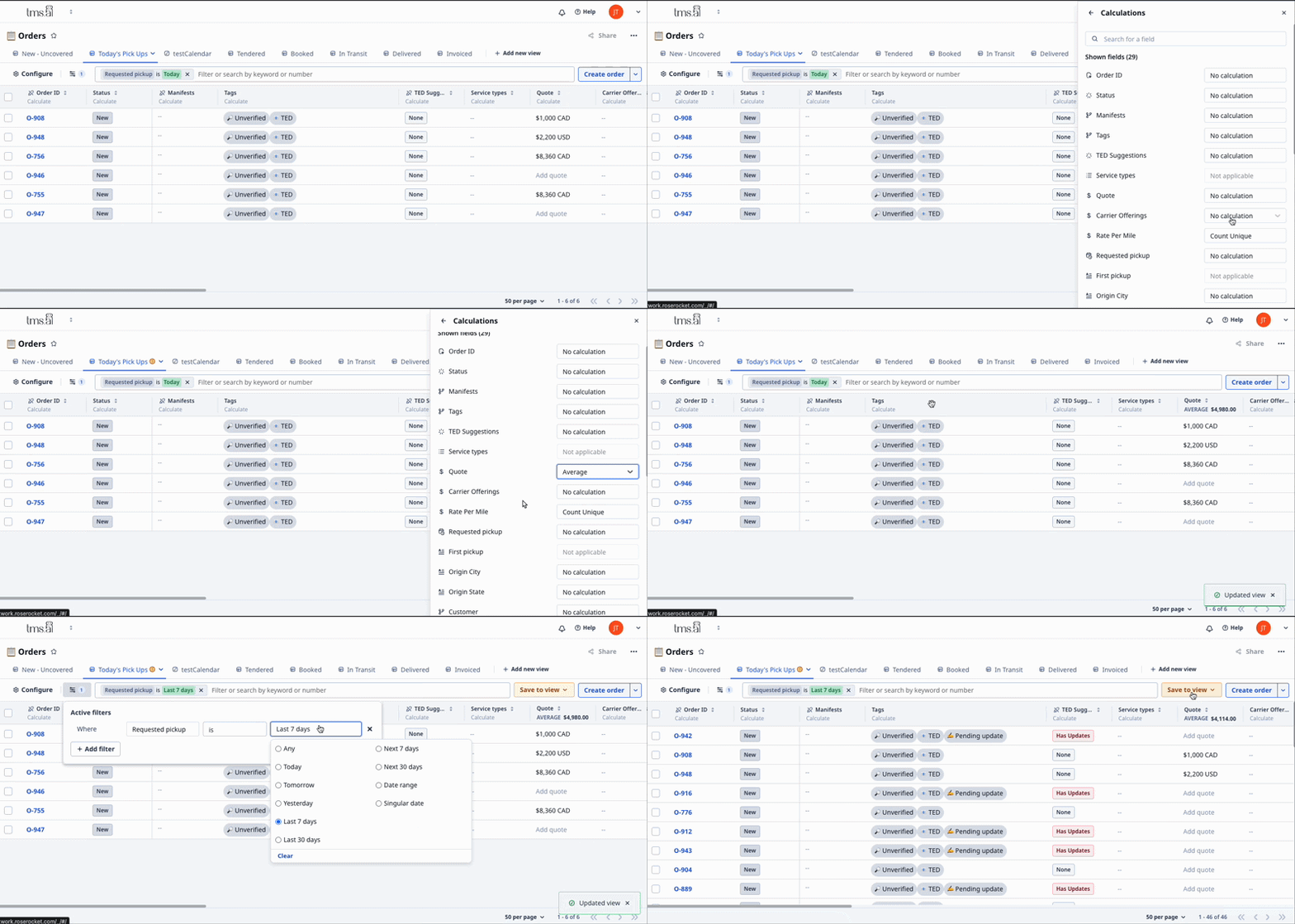
Table of Contents
- Editing Columns
- Editing Filters
- Creating Views
- Duplicating Boards
- Sharing Boards
- Starring Boards
- Pinning Views
- Grouping Data on Boards
- Grouping Data with Timeline View
- Analyzing Data on Boards
What is a Board?
A board is a list of objects such as an order, quote, task, or manifest.
Editing Columns
Add, arrange, and adjust the columns in your list how you want, so you are always looking at the information you need to get the job done. You can also freeze columns you want to keep visible when scrolling.
Click through the interactive video below for a step-by-step guide.
Editing Filters
Filters scan your data and return the required information that meets your specified criteria. They are used to temporarily hide or sort information. You can add multiple criteria, include or exclude results from a search, or find exact matches.
You can also group by fields like status, customer, etc. to better segment your data.
Click through the interactive video below for a step-by-step guide.
Creating Views
Saved Views are a quick and easy way to access saved searches which you may need to access more than once. You can create simplified workflows unique to your business, so your team can easily navigate to the information they need.
Click through the interactive video below for a step-by-step guide.
Duplicating Boards
Due to the diverse responsibilities within your team, we provide flexibility in managing and organizing data or information. You have the option to have your own workspace. This can be achieved by duplicating boards and personalizing columns, filters, and views according to your needs.
Click through the interactive video below for a step-by-step guide.
By default, the duplicated board is shared with no one except yourself.
Sharing Boards
Occasionally, you may need to collaborate with your colleagues by utilizing your current data. You have the option to share you board either with particular individuals or with everyone. You also retain the ability to withdraw access whenever necessary.
Click through the interactive video below for a step-by-step guide.
You cannot edit access on the original board.
Starring Boards
Within your organization, there might be numerous boards, but not all of them are pertinent to your work. Hence, you have the capability to mark certain boards as favourites or "star" them for easy access and quick reference.
Click through the interactive video below for a step-by-step guide.
This is user-specific. Only you can see the boards you have starred.
Pinning Views
In a board, you have the option to pin a specific view, which then becomes the default view. Whenever you navigate away from the page and return to it later, the pinned view will be immediately displayed, allowing you to quickly access relevant data and view it according to your preferred layout.
Click through the interactive video below for a step-by-step guide.
This is user-specific. Only you can see which view you have pinned, even if it's on a public board.
Grouping Data on Boards
Organize your data more effectively by grouping rows within a board. Grouping allows you to see related information together at a glance and makes it easier to analyze patterns or manage workloads.
You can group by fields such as Driver, Customer, Status, Pickup State, and more, depending on the board type.
Examples of how to use grouping:
-
Group by Driver to balance workloads across your team
-
Group by Status to focus on what’s active, delayed, or completed
-
Group by Pickup State to plan routes more efficiently
-
Group by Customer to track order volume and invoice in bulk
Click through the interactive video below for a step-by-step guide.
This functionality is available on any board and works alongside your columns, filters, and views. Once grouped, remember to Save your view so you can quickly return to it later.
Timeline View
Timeline view shows your records as horizontal bars on a time axis. Think of it as a Gantt chart for your board — ideal for planning and tracking work that spans multiple days, like orders moving from pickup to delivery or leg tasks with requested and actual pick up dates.
Examples of Using Timeline View
| Use Case | Start Date | End Date | Example |
|---|---|---|---|
| Order tracking | Pickup date/time | Delivery date/time | Visualize all in-transit orders across the week or day |
| Driver scheduling | Shift start | Shift end | See coverage gaps at a glance |
| Legs management | Requested delivery date | Actual delivery date | Track leg specific delivery performance |
Configuring Timeline View
To switch any board to Timeline view:
- Open your board and click the Configure button (the settings icon in the board toolbar)
- You'll land on Configure Panel. Then click Configure Layout
- Choose Timeline (the calendar icon)
- Configure your date fields that set the timeline size:
- Start date: Select the datetime field that marks the beginning of each record's span
- End date: Select the datetime field that marks the end and sets the size
- Set your preferred Default time axis:
- Week — 7-day increments (best for planning)
- Day — hourly increments (best for same-day ops)
- Optional: Toggle Hide field columns to maximize the timeline area and minimize field noise
- Click Save to View
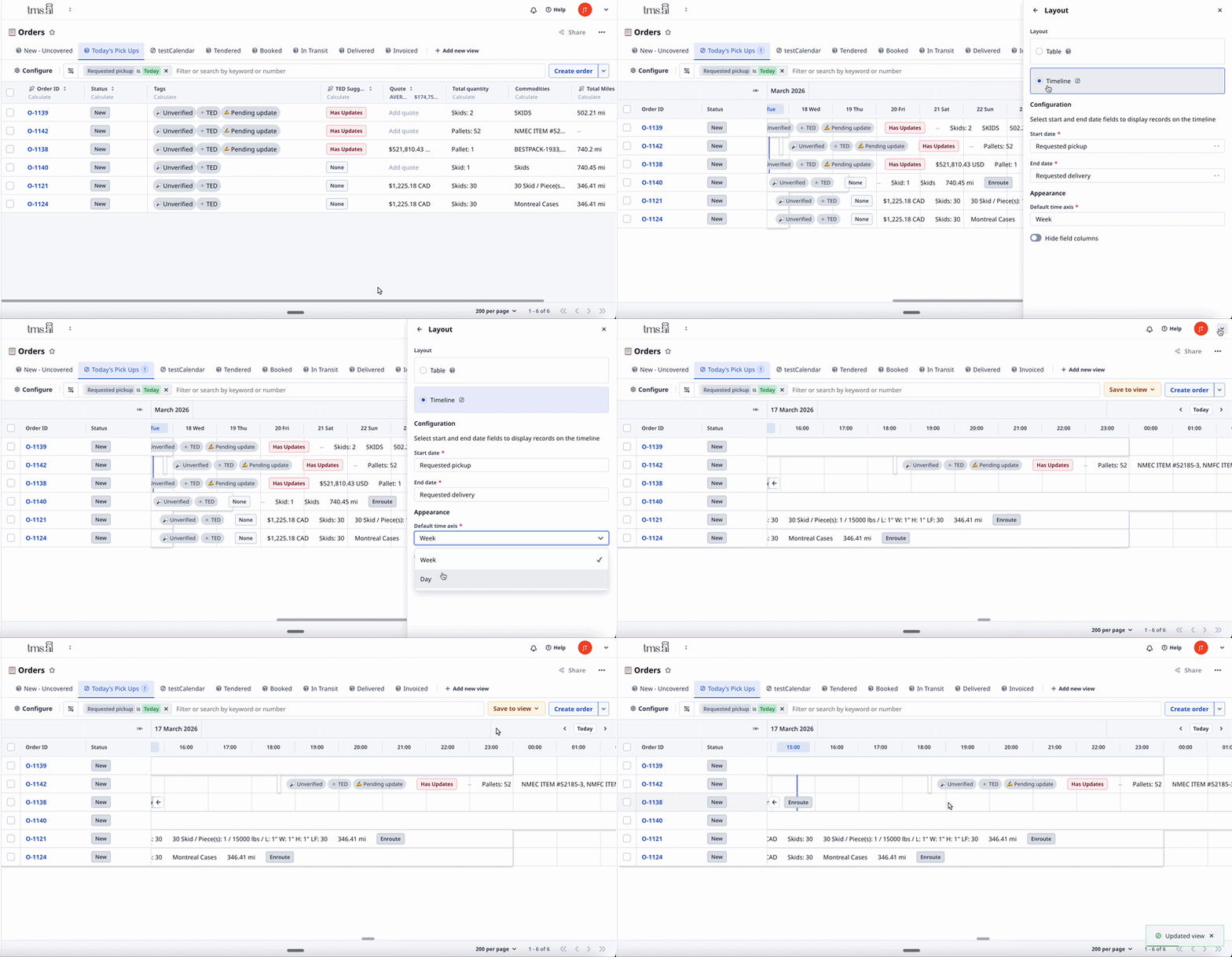
Tip: Hide columns when presenting a timeline. Toggle "Hide field columns" when sharing your screen — it maximizes the visual timeline and reduces clutter.
Reading the Timeline
Once configured, your records appear as horizontal bars:
- Bar position: Where the record falls on the time axis (based on Start date)
- Bar length: Duration between Start date and End date
- Bar color: Matches your board's color coding rules (learn how here)
- Scrolling: Drag left/right to navigate through time
- Today marker: A vertical line indicates the current date/time
Note: Making a timeline view is available to users with Board Settings permissions. Viewing a timeline is available for all users with access to that board.
Analyzing Data on Boards
See live totals, averages, and counts at the bottom of any board column — always reflecting your current filters and search.
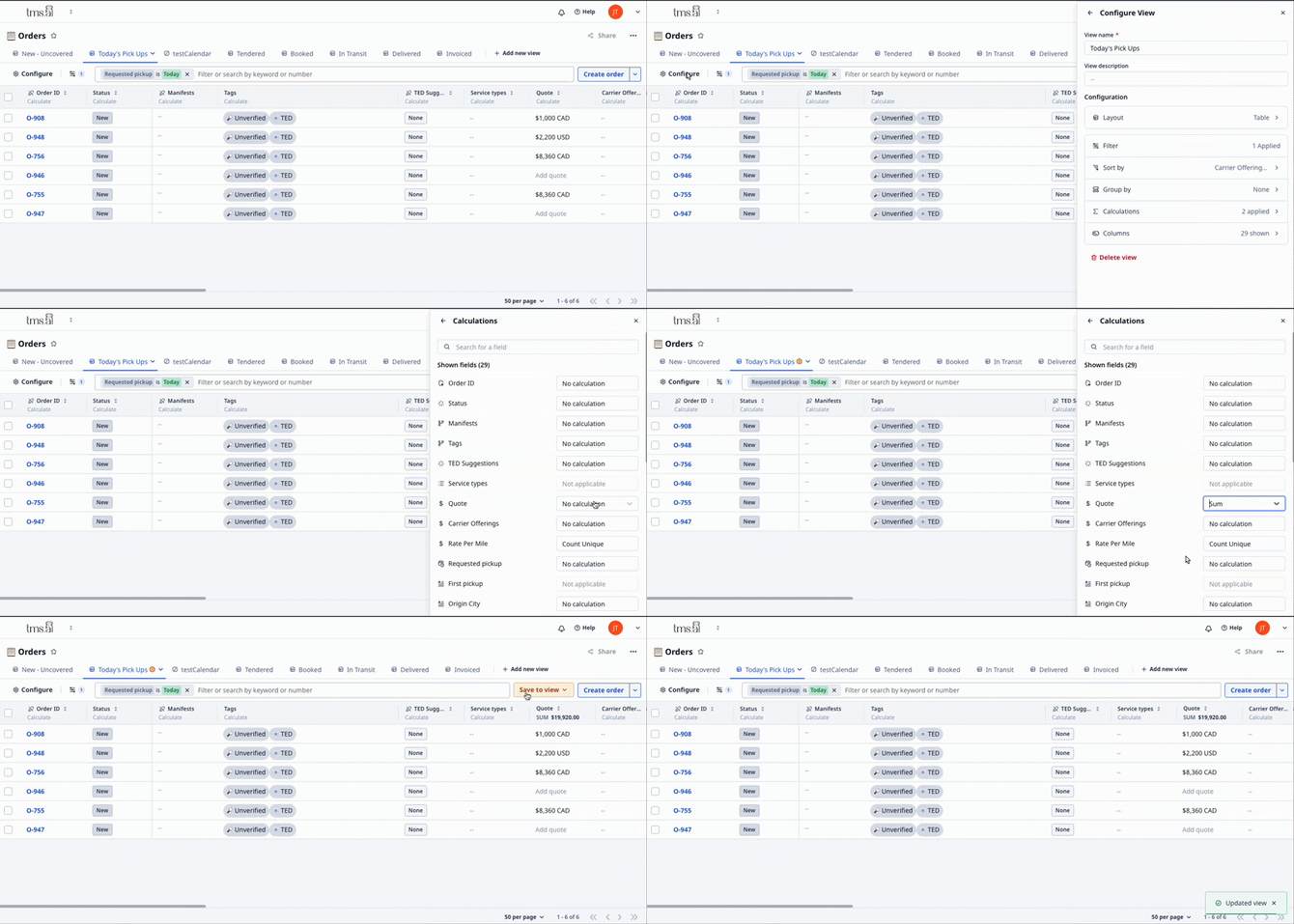
What you can calculate:
| Field type | Available calculations |
|---|---|
| Numeric and money fields | Sum, Average, Median, Min, Max |
| Date fields | Min (earliest date), Max (latest date), Range (span between earliest and latest) |
| Most fields (text, status, money, date) | Count, Count Empty, Count Unique |
Calculations persist per view — each saved view can display its own set of metrics.
How to enable:
- Open any board
- Click Configure
- Select the Calculations tab
- Choose a metric for each column you want to track